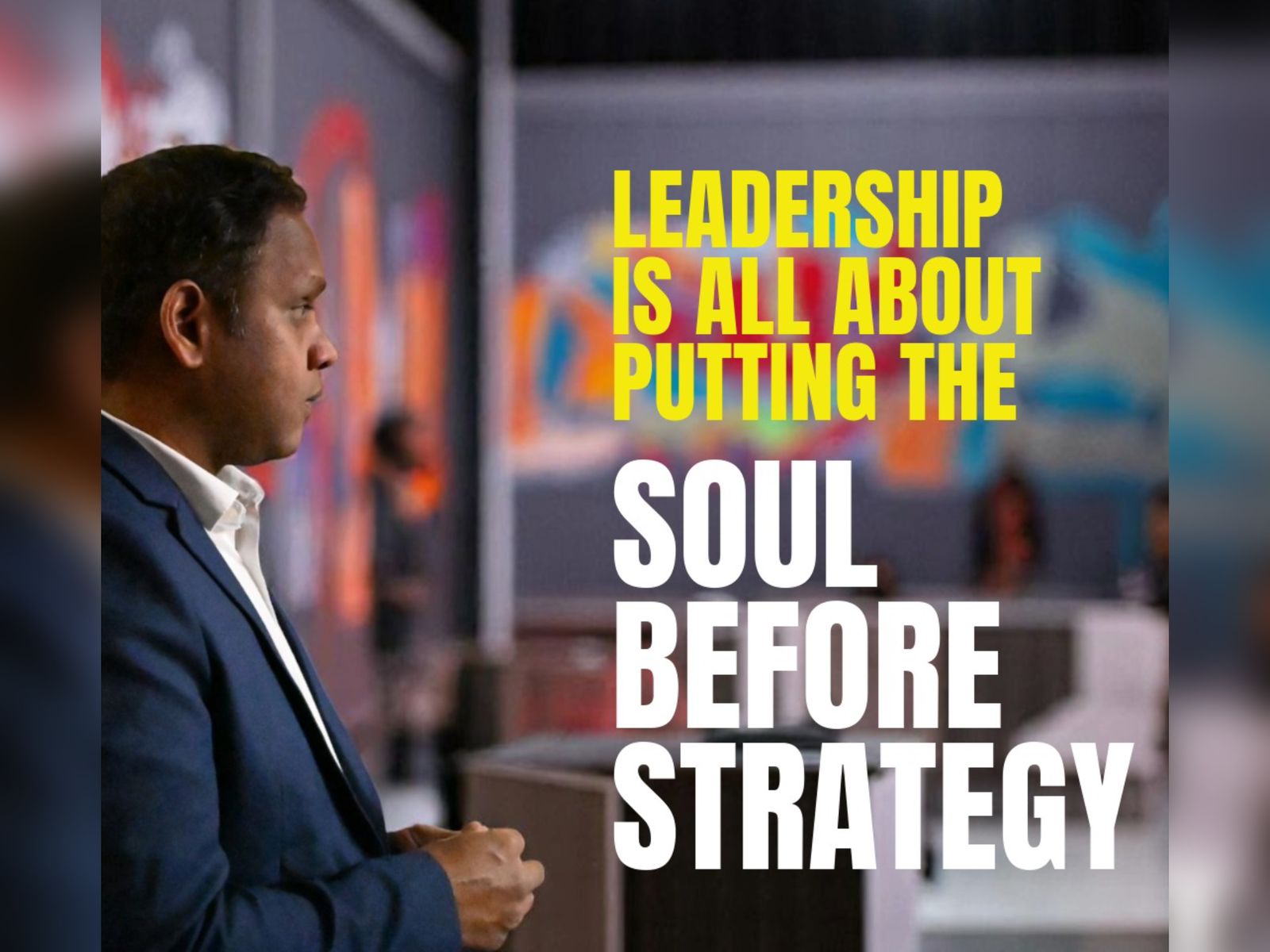
As India positions itself at the forefront of global artificial intelligence strategy, the conversation around ethics and responsibility has taken a surprisingly introspective turn. The recently launched book, AI-Driven Leadership: Leading with Dharma in the Age of AI, authored by leadership coach and spiritual strategist Kuruva Venkataramana Murthy, is quietly creating waves among Indian professionals, educators, and changemakers seeking to balance speed with soul.
Where most literature on AI leadership speaks of competitive advantage, Murthy’s book invites something different: a conversation about alignment between actions and values, between data and discernment, and between change and conscience.
Grounding AI Leadership in Indian Wisdom
Murthy’s central premise is that Dharma, the Indian philosophical principle that speaks to righteous duty and inner harmony, must become the operating system for leadership in the age of intelligent machines. The book does not oppose technology; instead, it challenges leaders to lead with awareness, rather than follow innovation blindly.
With its focus on inner clarity, the book feels less like a strategy manual and more like a spiritual compass for modern leadership. This is reflected in its structure, which blends ancient Indian concepts with contemporary dilemmas a fusion that has found an especially receptive audience across India’s entrepreneurial and public policy spaces.
The Unusual Launch That Set the Tone
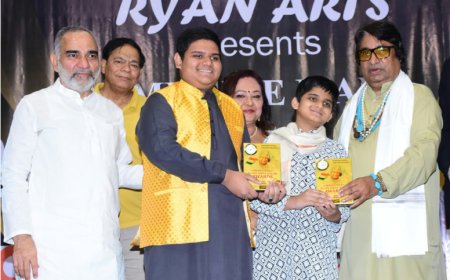
The book’s unveiling in Hyderabad did not involve industrialists or tech CEOs, but rather, mothers a symbolic choice that carried weight far beyond aesthetics. Speaking at the launch, Murthy noted, “The first clarity we receive in life doesn’t come from systems. It comes from those who raise us. Mothers teach us the patience to listen and the courage to care.”
That gesture set the foundation for a book that views leadership not as domination or disruption, but as a sacred act of remembrance of purpose, of ethics, and of self.
From Strategy to Stillness: A New Leadership Model
Rather than prescribing frameworks in a corporate tone, Murthy introduces what he calls the AAA rhythm Adapt, Amplify, Accelerate. But unlike traditional models that focus on agility and scale, each of these phases is tethered to Dharmic principles:
- Adapt, not by reacting to change, but by aligning with one’s core intent
- Amplify, not what’s profitable, but what is principled
- Accelerate, not just with momentum, but with meaning
What makes the book accessible is not just its language, but its actionable rituals like weekly alignment audits, Sankalpa (intention) setting, and decision review checklists that bring ancient concepts into the present moment.
A Five-Point Ethics Code for the AI Era
The book introduces a Panchsheel for AI Leadership, a reinterpretation of five timeless principles:
- Satyam – Data should reflect truth, not distort it.
- Ahimsa – AI should minimize unintentional harm, particularly psychological or social.
- Seva – Technology must serve all strata of society, not just the affluent.
- Viveka – Leaders must develop ethical filters for what not to scale.
- Sambandh – Relationships must be preserved, not sacrificed, in automation.
These are not abstract ideals but practical lenses, offered with real-world examples to guide founders, educators, and administrators alike.
A Reader’s Perspective: More Than a Book
“I’ve read many books about AI disruption. But this was the first book that asked me to stop, breathe, and remember who I was becoming in the process. It felt like sitting down with a teacher, not just a strategist.”
Vishakha Mehra
Such reflections are indicative of the book’s reach not just across sectors, but across mindsets.
More Than a Title A Movement
Through his platform One in the Universe, Murthy has spent years building intersections between storytelling, spirituality, and systems design. This book feels like the natural culmination of that work, drawing equally from Upanishadic inquiry, design thinking, and corporate transformation programs.
It’s not positioned as a bestseller. It’s positioned as a mirror meant to be returned to, not rushed through. And in that spirit, AI-Driven Leadership: Leading with Dharma in the Age of AI is being adopted by institutions looking to train not just their top executives but also their next generation of managers.
Conclusion: The Quiet Revolution
In a landscape where technological jargon often overshadows emotional intelligence, this book stands out by doing something radical it asks leaders to pause. To question not just what AI can do, but what it must not be allowed to undo. Kuruva Venkataramana Murthy has not offered a solution to AI disruption. He has offered a starting point a return to the self, before we scale anything else.