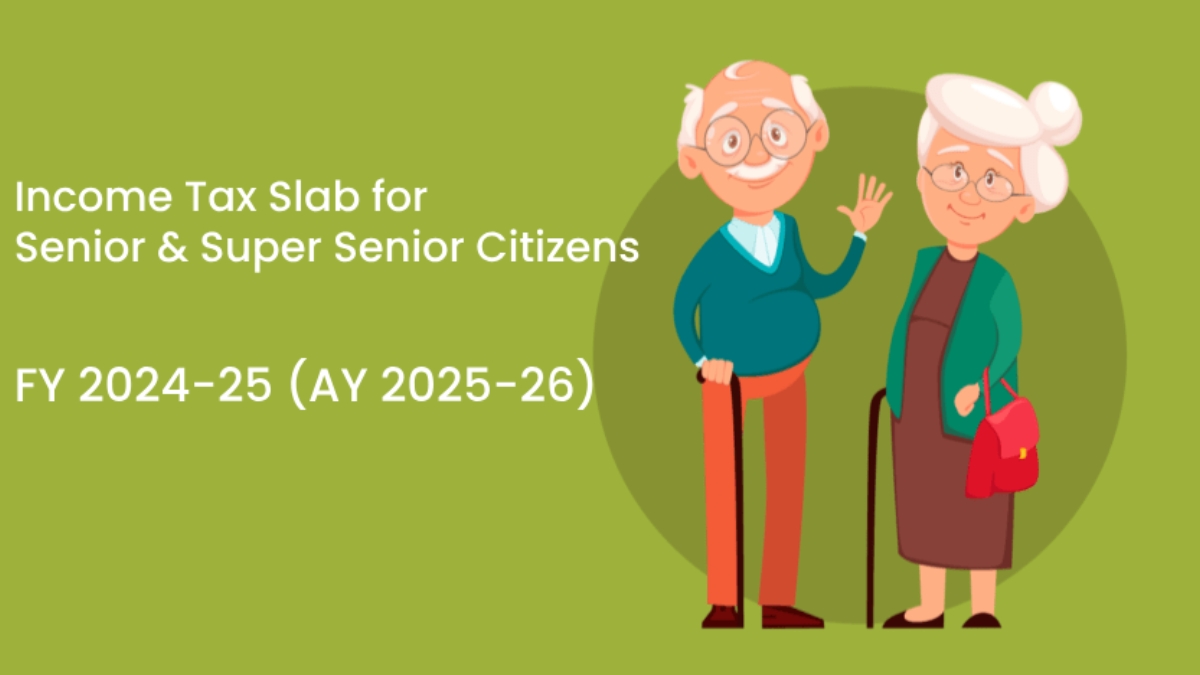
Pune (Maharashtra) [India], August 6: The Government of India offers special income tax provisions for resident Senior Citizens (aged 60–79 years) and Super Senior Citizens (aged 80 years or more) under the old tax regime. However, under the new tax regime, the same tax slab applies to all individuals regardless of age.
This article explains the income tax slabs applicable to senior and super senior citizens for FY 2024-25 (AY 2025-26) under both old and new regimes, along with key benefits, deductions, and filing criteria. (This blog is written by My Finance Gyan)
Who is a Senior and Super Senior Citizen?
As per the Income Tax Act, 1961:
Senior Citizen: A resident individual aged 60 years or more but less than 80 years.
Super Senior Citizen: A resident individual aged 80 years or more.
Note: Age is considered as ‘attained’ on the day before the individual’s birthday. For example, if someone turns 60 on 1 April 2025, they are treated as 60 years old on 31 March 2025, making them eligible for senior citizen tax benefits in FY 2024-25.
Income Tax Slabs – FY 2024-25 (AY 2025-26)
1. Old Tax Regime – Senior Citizens (Age 60 to 79 years)
Income Slab
Tax Rate
Up to ₹3,00,000
NIL
₹3,00,001 – ₹5,00,000
5%
₹5,00,001 – ₹10,00,000
20%
Above ₹10,00,000
30%
2. Old Tax Regime – Super Senior Citizens (Age 80 years and above)
Income Slab
Tax Rate
Up to ₹5,00,000
NIL
₹5,00,001 – ₹10,00,000
20%
Above ₹10,00,000
30%
3. New Tax Regime – Applicable to All (Including Senior & Super Senior Citizens)
FY 2024-25 (AY 2025-26)
Income Slab
Tax Rate
Up to ₹3,00,000
NIL
₹3,00,001 – ₹7,00,000
5%
₹7,00,001 – ₹10,00,000
10%
₹10,00,001 – ₹12,00,000
15%
₹12,00,001 – ₹15,00,000
20%
Above ₹15,00,000
30%
FY 2025-26 (AY 2026-27) – As per Budget 2025
Income Slab
Tax Rate
Up to ₹4,00,000
NIL
₹4,00,001 – ₹8,00,000
5%
₹8,00,001 – ₹12,00,000
10%
₹12,00,001 – ₹16,00,000
15%
₹16,00,001 – ₹20,00,000
20%
₹20,00,001 – ₹24,00,000
25%
Above ₹24,00,000
30%
Key Tax Benefits for Senior & Super Senior Citizens
1. Higher Basic Exemption Limit (Old Regime Only)
Senior Citizens: ₹3,00,000
Super Senior Citizens: ₹5,00,000
Others: ₹2,50,000
2. Standard Deduction
₹50,000 from pension/salary income (Old Regime)
₹75,000 (from FY 2024-25 onward) under the New Regime
3. Section 87A Rebate
Old Regime: No tax if income ≤ ₹5 lakh (₹12,500 rebate)
New Regime: No tax if income ≤ ₹7 lakh (₹25,000 rebate)
4. Medical Insurance Premium – Section 80D
Deduction up to ₹50,000 (Old Regime only)
5. Treatment of Specified Diseases – Section 80DDB
Deduction up to ₹1,00,000 for senior citizens and above
6. Interest Income Deduction – Section 80TTB
Deduction up to ₹50,000 for interest from savings, FDs, and post office (Old Regime)
7. Exemption from Advance Tax
If not earning from business/profession
8. Reverse Mortgage Benefits
No capital gains tax on payments from reverse mortgage scheme
Senior citizens aged 75 years and above need not file ITR if:
Income is from pension and interest only
Both incomes are from the same bank
A declaration is submitted to the bank
TDS is deducted by the bank under Section 194P
Conclusion:
Tax planning is vital for senior and super senior citizens to utilize available exemptions and deductions effectively. Opting for the most suitable regime—old (with deductions) or new (with lower rates)—can significantly reduce tax liability. Filing ITR on time ensures compliance and access to financial and legal benefits.
Disclaimer:The content of this post has been automatically published from an agency feed without any changes to the original text and has not been reviewed by our company’s editor. Our editorial team or company does not take responsibility for any errors or inaccuracies.