Spearheaded by Dr. Shweta Singh, Chaiperson, Council of Industrial Innovation & Research (CIIR) a globally renowned innovation strategist and intellectual property expert, Innovasthan is an initiative of Council of Industrial Innovation & Research (CIIR) powered by Ennoble IP, a leading global IP consulting firm. The initiative aims to bridge the gap between ideation and commercialization by equipping startups, universities, and MSMEs with tools for IP protection, innovation management, and collaborative growth.
Conceived as a state-wise national yatra, Innovasthan is designed to institutionalize innovation as a national culture rather than a one-time initiative. The movement seeks to discover grassroots innovations, facilitate their protection through patents, trademarks, and other IP rights, and propel them toward commercial scalability.
“Innovasthan is not just a program—it’s a mindset revolution, we aim to build a self-reliant Bharat by creating an ecosystem where every innovator is empowered, protected, and celebrated.”, said Dr. Shweta Singh.
In his keynote address, Governor Shri Thawarchand Gehlot reflected on India’s ancient knowledge systems—from Takshashila and Nalanda to Aryabhata and Sushruta—as the foundational roots of the country’s innovation potential. He underscored the importance of converting intellectual capital into innovation capital and praised India’s remarkable ascent in the Global Innovation Index, from 81st in 2015 to 40th in 2023. Stressing the mantra “Innovate – Protect – Scale,” he called on startups and academic institutions to prioritize intellectual property, pointing out that despite India housing over 100,000 startups and 110 unicorns, IP awareness, protection, and monetization still remain critical gaps.
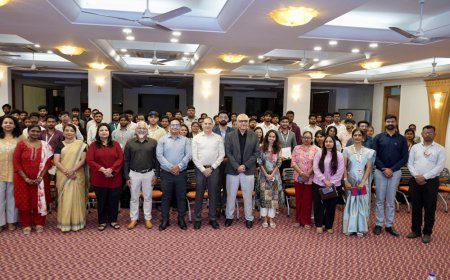
The event brought together a distinguished line-up of national leaders from academia, policy, and industry to shape the future of innovation in India. Dr. Chenraj Roychand, Chancellor of Jain (Deemed-to-be University), spoke on the indispensable role of academia in fostering entrepreneurial mindsets. Prof. (Dr.) Ashutosh Sharma, President of the Indian National Science Academy, emphasized the need to strengthen the lab-to-market pipeline to ensure research translates into real-world impact. Prof. T.G. Sitharam, Chairman of the All India Council for Technical Education (AICTE), advocated for vernacular-based technical education to encourage grassroots innovation. Joining virtually, Prof. Unnat P. Pandit, Controller General of Patents, Designs and Trademarks at DPIIT, called for the seamless integration of IP education into national academic curricula. Dr. Ashwin Fernandes, Executive Director (AMESA) at QS Quacquarelli Symonds, highlighted how Indian institutions can significantly improve their global innovation rankings by aligning with robust IP frameworks.
A high-impact panel discussion titled “From Policy to Practice: Bridging Academia, Startups, and Industry” featured leaders from institutions such as SPJIMR, UpGrad, WIPRO, DXC Technology, and Omega Seiki Mobility. The discussion focused on building platforms to commercialize innovation, strengthening IP infrastructure, and scaling innovative solutions across sectors. Panelists also stressed the need to enhance innovation-readiness across higher education institutions to ensure long-term sustainability in India’s innovation ecosystem.
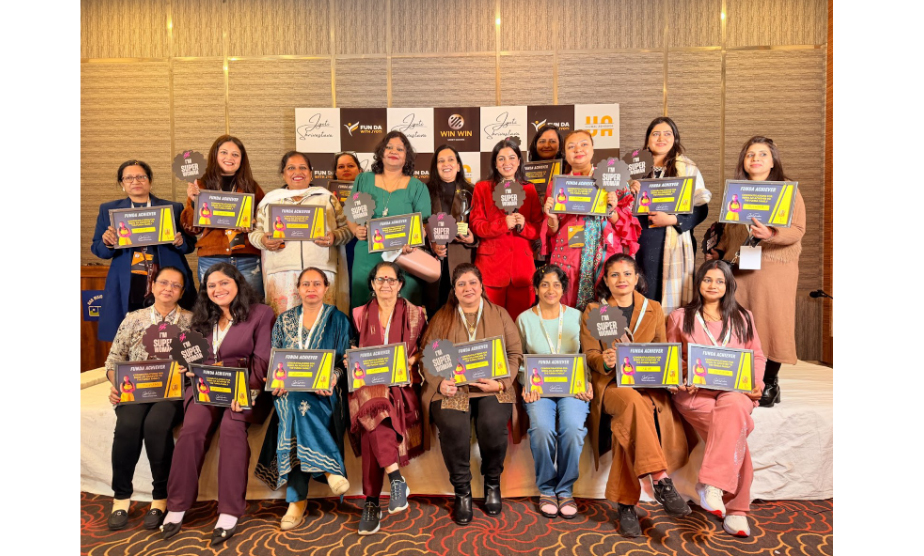
The event concluded with a Recognition Ceremony honoring outstanding changemakers who have significantly contributed to India's innovation and IP landscape. The launch of the Bengaluru chapter is only the beginning. Innovasthan is set to travel to 20 Indian states, with upcoming chapters planned in Odisha, Bihar, Nagaland, Assam, Punjab, Uttarakhand, and Delhi.
In every state, the movement will work to identify and nurture local innovators, provide them with access to IP support and mentoring, and facilitate partnerships among startups, academia, and industry. The initiative also aims to promote innovation-led development and foster deeper IP literacy at the grassroots level.
“Innovation is not a department. It is a culture,” remarked Dr. Shweta Singh in her closing address. “Innovasthan is our collective vision to create a future-ready India where every student, entrepreneur, and researcher plays a role in building a robust innovation economy.”
With the launch of Innovasthan, India is not merely encouraging innovation—it is protecting it, scaling it, and embedding it into the very fabric of national development.
https://ciir.in/
https://www.linkedin.com/company/council-of-industrial-innovation-research/