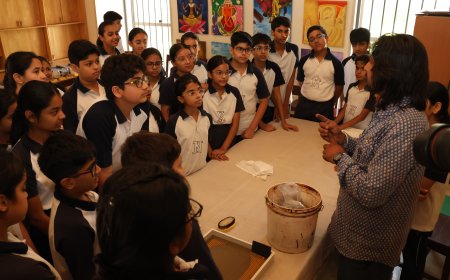
Open a board-exam livestream in India and the sight is striking: hundreds, often thousands, of students logged into the same session, muted, and largely passive. The teacher speaks into the void while time ticks on. Despite the availability of instant-answer AI searchbots, this crowded model continues to dominate serious exam preparation.
Searchbots at the Margins
AI systems are not absent from the picture, but they remain on the periphery. Surveys show Indian students use chatbots mainly for MCQs, quick definitions, or sample problems—tasks that don’t directly decide major exam outcomes [1]. When it comes to complex, syllabus-specific, or mark-scheme-aligned work, trust in AI sharply declines. In fact, studies reveal that barely 6% of students consider AI answers highly accurate, while the majority flag issues of irrelevance, factual errors, or lack of personalisation [2].
Why Batches Feel Safer
The preference for livestreams, however imperfect, stems from the rigid demands of Indian board exams. Students need:
Full syllabus coverage without overlooked subtopics
Stepwise solutions that map directly to marking schemes
Revision methods that adapt to repeated mistakes
Instruction in their chosen language
Generic AI tools—designed for breadth across countless domains—cannot consistently provide such outcome-oriented precision. So students stick to the large-group livestream model: less interactive, but more familiar and seemingly aligned with exam formats.
The Missing Middle: Teaching, Not Answering
What students lack is an AI that doesn’t just spit out information, but teaches like a dedicated tutor. That means:
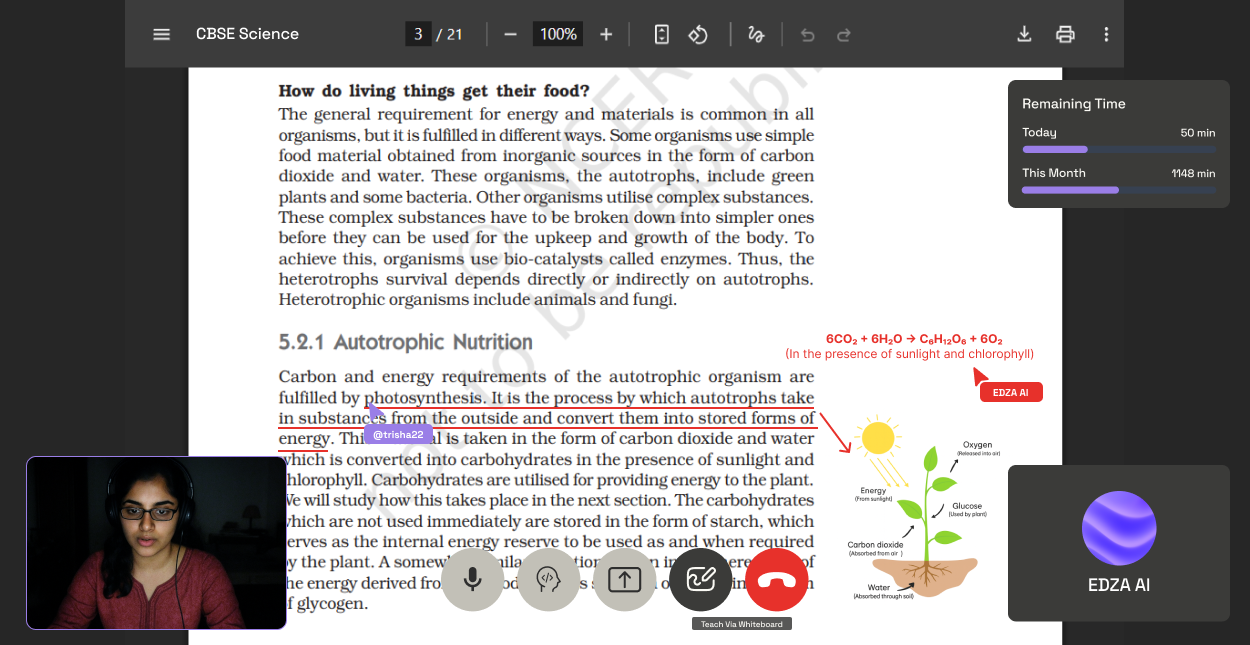
Looking directly at a student’s textbook or notes via screenshare
Solving problems collaboratively on a whiteboard
Designing tests based on current weaknesses, not static blueprints
Remembering past struggles to avoid repeating the same unhelpful explanations
In short, a tutor that behaves like a human guide, not a search engine.
Edza AI’s Attempt to Fill the Gap
Edza AI has been built for precisely this gap. Unlike chatbots that chase breadth, it narrows in on chapters, past papers, and marking schemes that matter most for boards and competitive exams. Its model is exam-aware and adaptive, remembering a student’s progress across sessions.
Where searchbots aim to answer everything, AI Personal Tutors like Edza AI, aims to teach one student well—through step-by-step co-solving, personalised tests, and explanations that mirror official marking patterns. With its voice-first support in Indian languages, it can switch seamlessly from a Hindi-medium learner in Gorakhpur to an English-medium Class 12 student in Mumbai.
After a debut with Class 10 students, the platform is now extending to Classes 11 and 12 from August 15, 2025, widening access for those entering the most competitive phase of their academic lives.
A Likely Shift Ahead
If AI begins to consistently teach—by adapting to the learner’s syllabus, language, and mistakes—the appeal of 10,000-student livestreams may diminish. India’s exam ecosystem doesn’t need more video lectures or massive batches; it needs personal attention-based and outcome-driven teaching at scale.
Searchbots answer. Livestreams broadcast. But AI personal tutors are aiming to teach—one student at a time.
References
[1] Singh, V., & Agrawal, R. (2025). Exploring the Role of Generative AI in Indian School Education: A Quantitative Study on ChatGPT’s Adoption Patterns. arXiv preprint arXiv:2505.24126. Available at: